Before buying a container
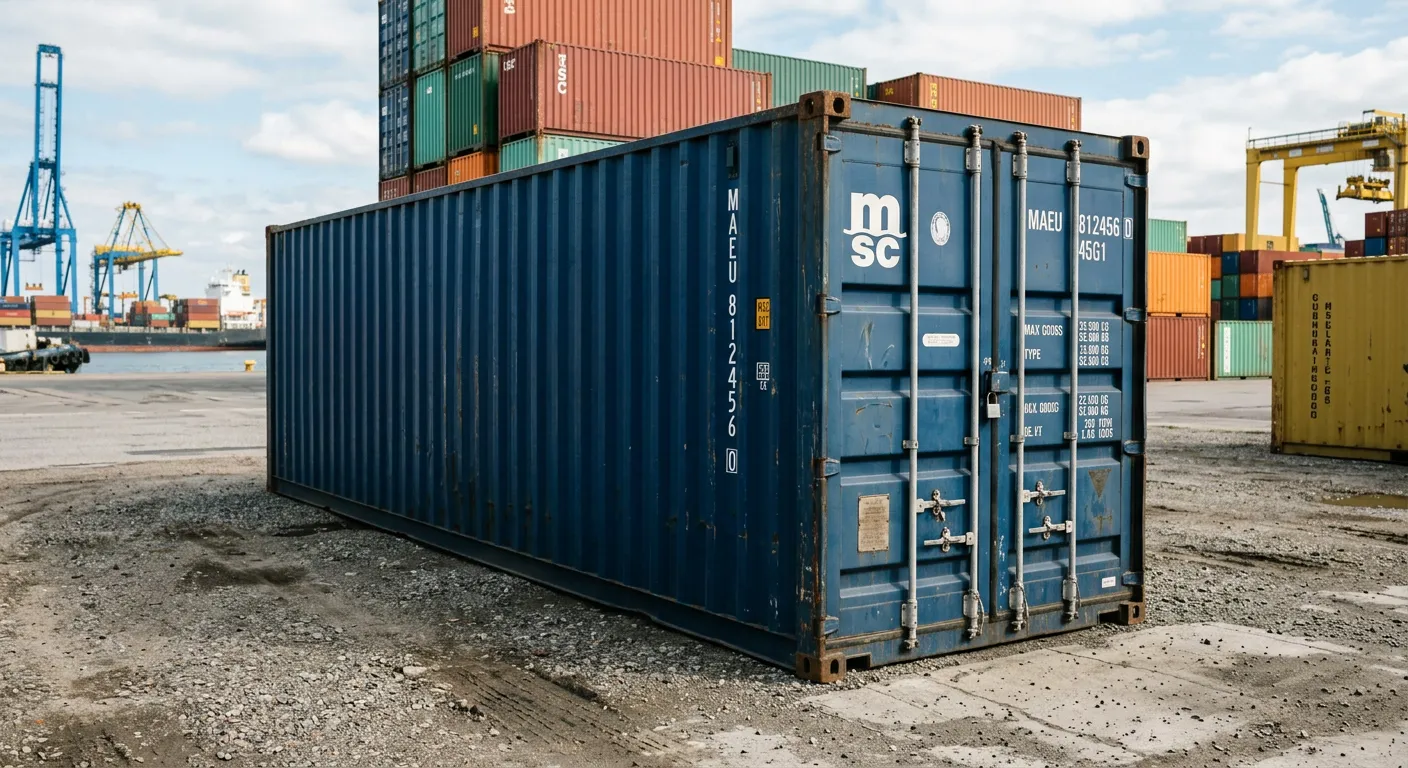
Buying a shipping container isn’t just about picking a size and a price. Before you order, you need to make sure your town allows it, that the truck can reach your lot, that the ground is ready for it and that the format you picked really fits your use. In this article, we go over the 5 questions to settle before buying a shipping container in Quebec, so there are no surprises on delivery day.
1. Do you need a permit to install a shipping container in Quebec?
There is no single province-wide rule in Quebec: your municipality decides, through its zoning bylaw. Requirements can differ a lot from one town to the next, and even from one zone to another within the same town.
Generally speaking, here’s what we see:
- Industrial and commercial zones: storage containers are often allowed, sometimes with a certificate of authorization, setbacks to respect and a maximum number of units.
- Residential zones: many municipalities prohibit or tightly regulate containers used as accessory buildings (shed, garage). Others accept them if they are clad, painted or screened from the street.
- Agricultural zones: farm use (storing equipment, grain, supplies) is often more readily accepted, but the CPTAQ and the municipality may have a say.
- Construction sites: a temporary container is usually tolerated for the duration of work covered by a building permit.
Before buying, call your town’s urban planning department and ask:
- Is a shipping container allowed in my zone, and as what (accessory building, temporary storage)?
- Do I need a permit or certificate of authorization? How long does it take?
- What setbacks (property lines, main building) do I need to respect?
- Are there appearance requirements (colour, cladding, visual screen)?
2. Can the delivery truck reach your lot?
A container is delivered on a tilt-bed truck: the truck backs up, tilts its deck and slides the container onto the ground. It’s a simple method, but it needs room.
For a smooth delivery, plan for roughly:
| 20-foot container | 40-foot container | |
|---|---|---|
| Straight-line clearance | about 60 to 75 ft | about 100 to 120 ft |
| Access width | about 12 ft | about 12 to 14 ft |
| Overhead clearance (wires, branches) | about 16 to 18 ft | about 16 to 18 ft |
A few things to check before delivery day:
- The ground must hold the truck: a lot that is soaked in spring or only frozen on the surface can get the truck stuck.
- Obstacles: power lines, trees, fences, narrow gates, steep slopes.
- Door orientation: decide ahead of time which way you want the doors to face. Once the container is down, turning it around is difficult.
- Winter: the access path and the spot must be cleared of snow. In Quebec, this is often what delays a delivery.
At GSA, we check access with you when you request a quote . Feel free to send us photos of your lot.
3. What foundation does a container need?
A container doesn’t need a concrete slab, but it should never sit directly on bare ground. Ground moisture speeds up corrosion of the floor and frame, and uneven support can warp the structure until the doors no longer close properly.
The most common options in Quebec:
- Compacted gravel: a well-levelled, compacted crushed-stone base. Affordable and effective for storage, with good drainage.
- Concrete blocks or timbers under the four corners: the container rests on its corner castings, which are designed to carry the load. It stays raised, so air can flow underneath.
- Helical piles: the most stable option against freeze-thaw cycles. Recommended for a converted container (office, workshop) or a long-term installation.
- Concrete slab: useful if the container is part of a permanent project or if your town requires it.
Either way, the container must be level. Even a few centimetres off can make the doors bind and let water pool on the roof.
4. What are the exact dimensions of a container?
Exterior dimensions help you plan the location. Interior dimensions tell you what you can fit inside. Here are the standard measurements:
| 20 ft standard | 40 ft standard | 40 ft high-cube | |
|---|---|---|---|
| Exterior (L × W × H) | 20′ × 8′ × 8′6″ | 40′ × 8′ × 8′6″ | 40′ × 8′ × 9′6″ |
| Interior (L × W × H) | 19′4″ × 7′8″ × 7′10″ | 39′5″ × 7′8″ × 7′10″ | 39′5″ × 7′8″ × 8′10″ |
| Door opening (W × H) | 7′8″ × 7′5″ | 7′8″ × 7′5″ | 7′8″ × 8′5″ |
| Volume | about 33 m³ (1,170 ft³) | about 67 m³ (2,390 ft³) | about 76 m³ (2,690 ft³) |
| Empty weight | about 2,200 kg | about 3,750 kg | about 3,900 kg |
Measurements can vary by a few centimetres depending on the manufacturer. If your fit is tight (machinery, shelving, a vehicle), check the door opening, not just the interior.
5. Standard or high-cube: which one should you choose?
A high-cube is one foot taller than a standard container, which gives you about 13% more volume on the same footprint.
Choose a standard container if:
- you’re storing boxes, tools or low equipment;
- you’re on a tight budget;
- overall height matters (municipal bylaw, clearance under a wire or roof).
Choose a high-cube if:
- you’re storing tall items (stacked pallets, industrial shelving, machinery);
- you’re planning a conversion (office, workshop, retail space). The extra foot leaves room for insulation and a ceiling without making the space feel cramped;
- you want to maximize volume without taking up more ground.
For a conversion, a high-cube is almost always the better choice. See what we can build with our custom containers .
For purchase prices, read our article How much does a shipping container cost in Quebec in 2026? If you’re still deciding on condition, see also New vs used shipping containers .
Checklist before you buy
- I’ve confirmed with my municipality that a container is allowed and I have the required permit.
- The truck can reach my lot (length, width, overhead clearance, firm ground).
- I’ve chosen the exact spot and the door orientation.
- The foundation is ready and level.
- I’ve chosen the size based on what I’ll store (not just on price).
- I’ve chosen between standard and high-cube.
Conclusion
Most bad surprises with a shipping container come from everything around the purchase, not the container itself: a denied permit, a truck that can’t get through, poorly prepared ground or the wrong format. By settling these five questions ahead of time, you’ll get a quick delivery and a container that lasts for years.
Have a container project in Quebec or elsewhere in Canada? Fill out our quote form : we’ll check site access, format and delivery with you and send you a custom offer, with financing available.