Construction Site Containers: A Contractor’s Guide
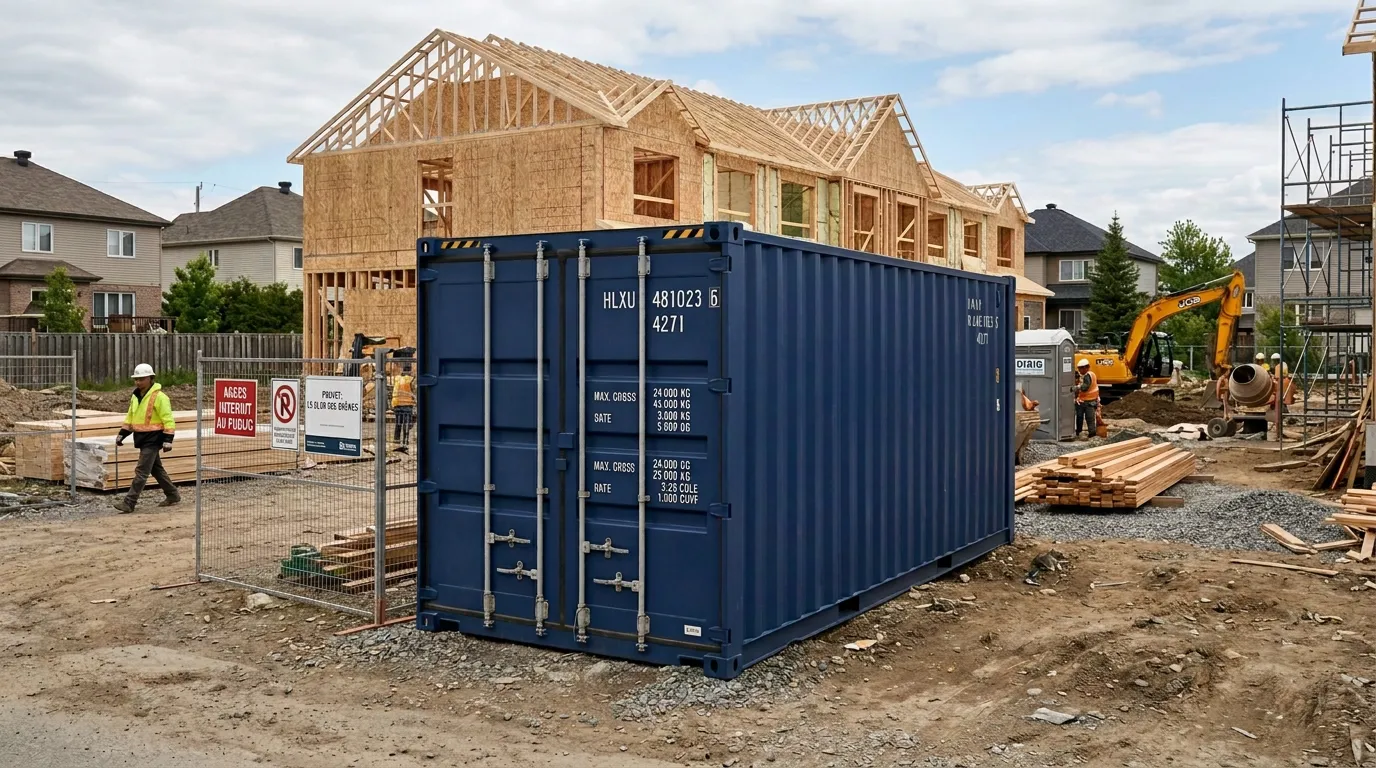
On a construction site, every hour counts. Driving back to the shop for a forgotten tool, discovering stolen equipment on a Monday morning, or finding materials ruined by rain: these losses of time and money add up fast.
That’s why more and more general contractors, subcontractors and project managers are buying a shipping container for their job sites. Sturdy, lockable and easy to move, it becomes a real work tool. Here’s how to get the most out of it.
1. Why use a shipping container on a construction site?
- Security: Corten steel walls and locking-bar doors offer far better protection than a shed or an enclosed trailer.
- Weather resistance: built for ocean shipping, it keeps tools and materials safe from rain, snow and wind, summer and winter alike.
- Mobility: once the job is done, it moves on to the next site. A single purchase can serve you for many years.
- Speed: no construction required. It’s delivered, set down and ready to use the same day.
- Professional image: a tidy site with a dedicated storage area builds trust with clients and inspectors.
2. The most common uses in construction
Tool and equipment storage. This is the number one use. Power tools, scaffolding, generators, compressors: everything stays on site, under lock and key, with no unnecessary trips.
Material storage. Lumber, drywall, insulation, hardware, siding: moisture-sensitive materials stay dry until they’re installed, which cuts down on waste.
Site office. Fitted with insulation, a window, lighting and heating, a container becomes an office for reviewing plans, holding coordination meetings and welcoming clients. See our custom containers for fit-out options.
Mobile workshop. A workbench, wall storage and an electrical hookup let your crew make cuts and small assemblies under cover, right on site.
Off-season storage. For paving, landscaping or roofing companies, a container is also a great way to store equipment in the company yard during the off-season.
3. Which model should you choose?
| Need | Suggested model |
|---|---|
| Small jobs, residential renovations, tight spaces | 20 ft standard : compact, easy to place in a driveway or yard |
| Large sites, lots of equipment or materials | 40 ft standard : twice the space at an attractive cost per square foot |
| Scaffolding, tall equipment, vertical storage | 40 ft High Cube : about one extra foot of height |
| Quick access from both ends | Double door container : handy for keeping tools and materials separate |
| Forklift loading along the full length | Side door container : everything is accessible at a glance |
| Fitted-out office or workshop | Custom container : insulation, windows, man door, electrical |
New or used? For tool storage, a used container in good condition (wind and watertight) is often the best value. For a site office that represents your company in front of clients, a new (“one-trip”) container looks better. Our guide New vs. used shipping containers explains the differences.
4. Protect your equipment from theft
Tool and material theft is a well-known problem on construction sites. A container is already an excellent barrier, and a few additions make it even more of a deterrent:
- Lockbox: a welded steel plate that covers the padlock so it can’t be cut with bolt cutters.
- A quality shrouded-shackle padlock that stands up to freezing temperatures.
- Strategic placement: face the doors toward a visible area (street, office, lighting) rather than an isolated corner.
- Lighting and a camera: a motion sensor and a cellular camera are modest investments compared with the value of your equipment.
- Inventory: keep a list (with serial numbers) of the equipment stored inside. It’s useful for insurance if anything goes wrong.
5. Prepare the installation on site
Before delivery, a few checks will help you avoid surprises:
- Location: choose a spot that won’t get in the way of the work, material deliveries or heavy machinery for the full length of the project.
- Truck access: plan a clear, straight path with no power lines or low branches overhead.
- Base: firm, level ground (compacted gravel or concrete blocks at the corners) keeps the doors easy to open.
- Regulations: some municipalities regulate temporary container installations. Check with your city before delivery.
Our article on questions to ask before buying a shipping container covers these points in detail. And if your materials are sensitive to moisture, read our condensation and rust guide .
6. An investment that pays for itself
For a contractor moving from one job to the next, buying a container is often more cost-effective in the long run than repeated temporary solutions:
- it serves project after project for many years (see how long shipping containers last );
- it reduces losses from theft and weather;
- it cuts down on trips to the shop, saving billable hours and fuel;
- it keeps good resale value when properly maintained.
And to protect your cash flow at the start of a project, financing is available on container purchases at Conteneur GSA. For an idea of costs, see how much a shipping container costs in Quebec in 2026 .
Frequently asked questions
What size container is best for a construction site? A 20 ft container suits most residential jobs and tight spaces. A 40 ft or 40 ft High Cube is ideal for commercial sites or when you store a lot of equipment.
Can a container be moved from one site to another? Yes. Just empty it and arrange for transport by a suitable truck. It’s one of its main advantages.
Can a container be converted into a site office? Yes. With insulation, a man door, windows, electrical and heating, it becomes a comfortable year-round office.
Is a container really secure against theft? It’s one of the most secure ways to store equipment on a construction site, especially with a lockbox and a highly visible location.
Equip your job sites today
20 ft, 40 ft, High Cube, double door, side door or custom containers: the Conteneur GSA team will help you choose the right model for your sites, with turnkey delivery and financing available.
Request your quote or call us at 514-594-4929.